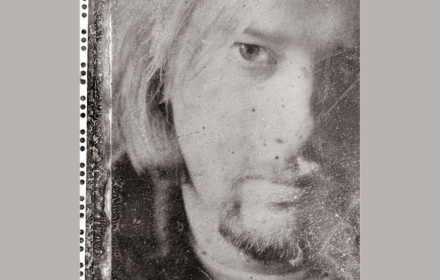
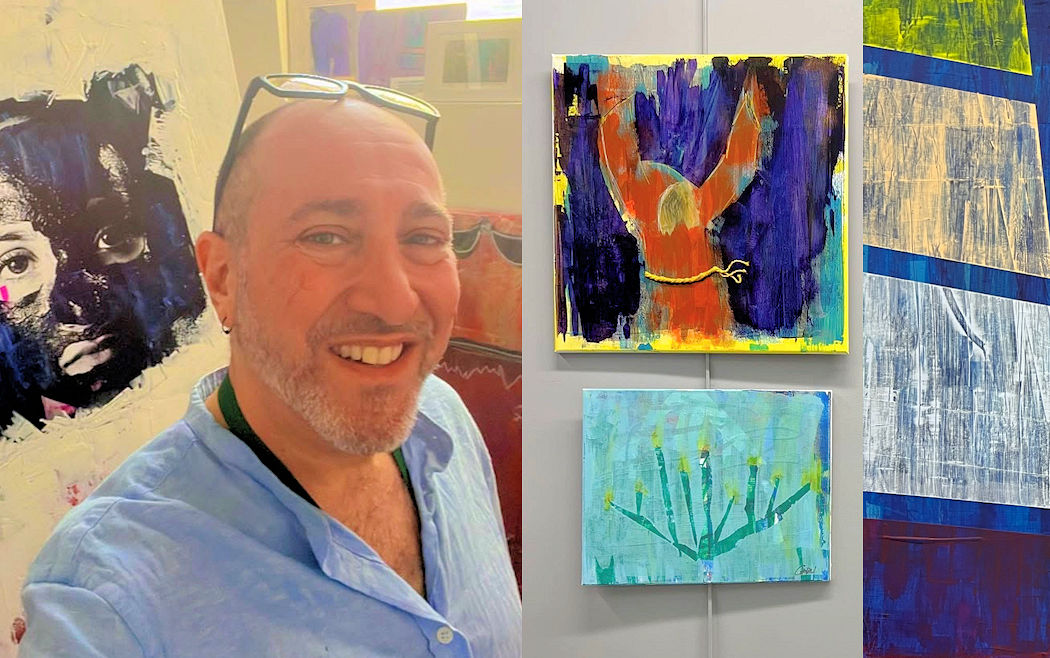
There’s something deliciously unfiltered about the work of Gary Gore — like downtown New York energy colliding with pop memory, emotional static, and a visual language that feels both familiar and just out of reach.
His work doesn’t come from a single moment or aesthetic; it feels like it has lived a few lives before it ever reaches the canvas, carrying layers of color, motion, humor, grit, memory, music, and a trace of beautiful damage that refuses to sit still.
At first glance, it’s playful and loud — but the longer you sit with it, the more you realize nothing is accidental. The familiarity is intentional, but never obvious. It’s the feeling of almost recognizing something — a corner store sign, a childhood cartoon, a song you can’t quite place — and that tension between recognition and mystery is exactly where his work lives.
“The phrase ‘Flowers Die, Candy Kills, Art Is Forever’ has a bit of a joke in it, but underneath that is a real belief that art matters. Flowers are beautiful, candy is fun, but art sticks around in a different way. It becomes part of a room, part of a life, part of somebody’s memory. It can outlast the moment it came from.”
The Emotional Static of Nostalgia
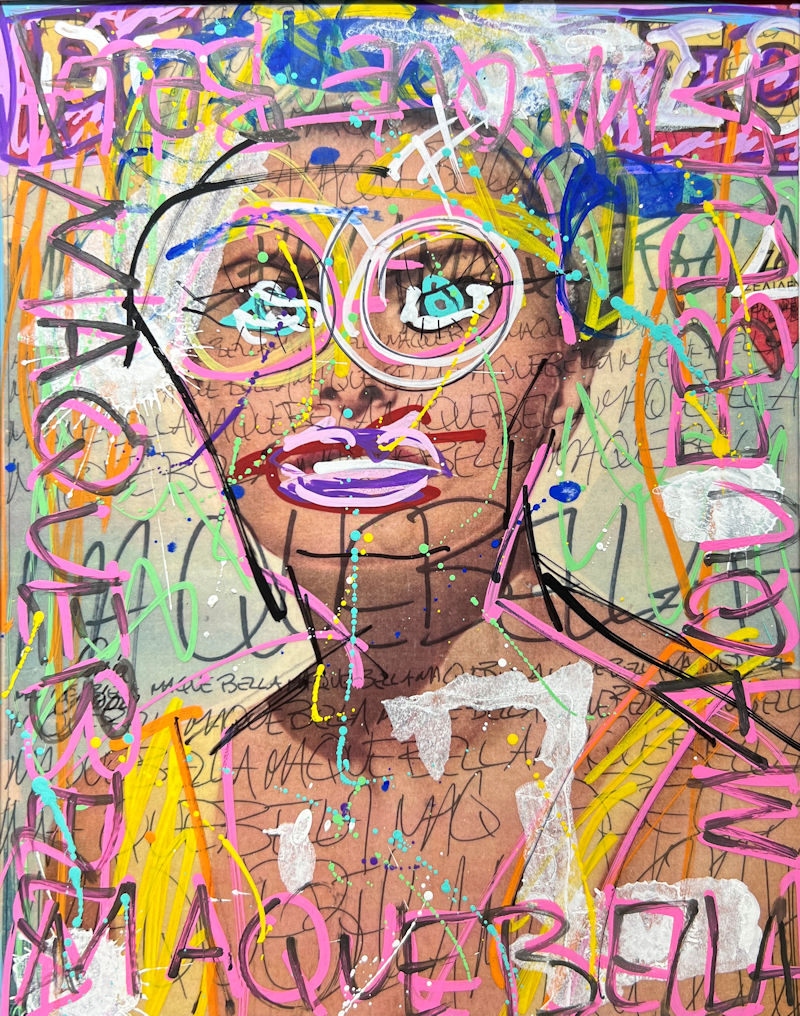
Gore doesn’t approach nostalgia as sentimentality or longing for a “better” past. Instead, he’s drawn to the distortion inside memory itself — the way old imagery carries emotional static rather than clarity. A faded cartoon, a warped cereal-box palette, a flickering movie poster, or a street sign peeling in the city heat all become fragments that hold memory and distortion at the same time.
In his work, these cultural leftovers are never preserved as they were; they’re broken open and reassembled into something more chaotic and alive. What emerges isn’t a reconstruction of the past, but something closer to its emotional residue — where meaning and absurdity sit side by side and refuse to resolve neatly.
His imagination pulls from that space constantly: pop culture, music, New York grit, humor, and the strange way the brain archives visual noise not as narrative but as texture and feeling. It’s exactly this collision point — where something feels ridiculous and meaningful at once — that fuels the entire visual world.
“My imagination is fed by pop culture, music, New York energy, childhood memory, old media, street art, humor, and the weird way your brain files things away. I like pulling from that place where something can be ridiculous and meaningful at the same time.”
Painting Like a Soundtrack
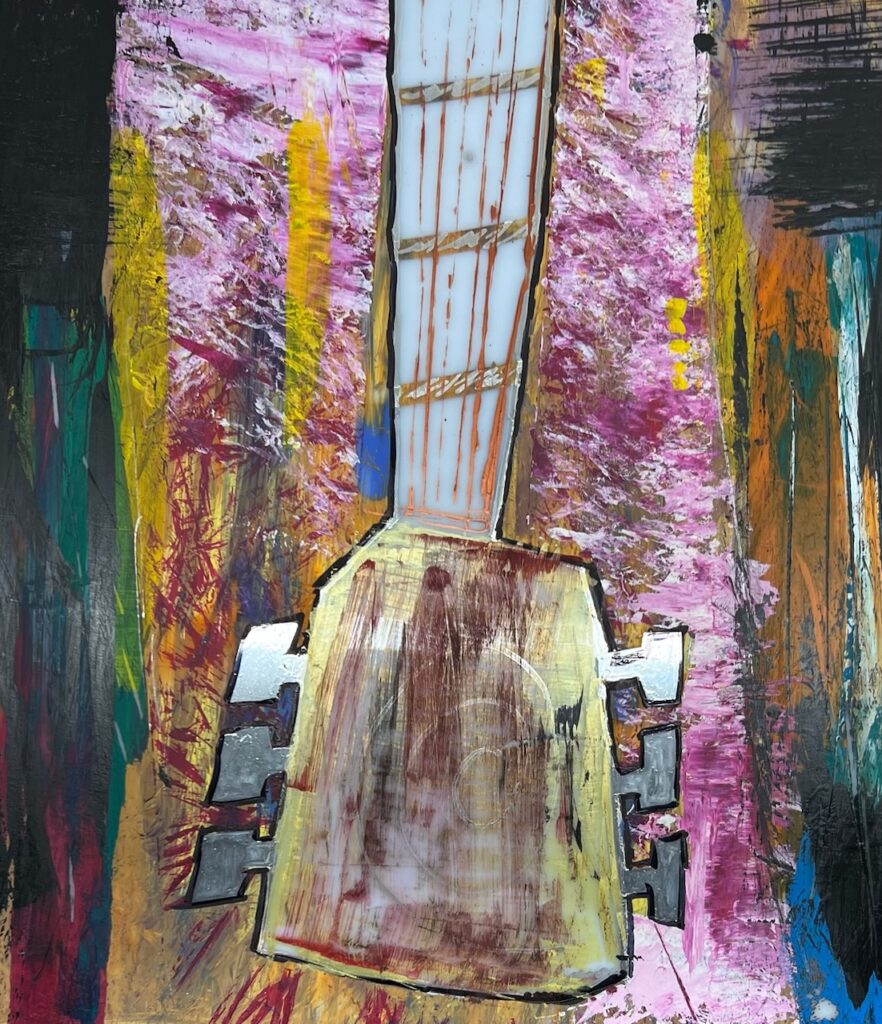
If his paintings feel like music, it’s because they are built like it. With a background in DJ culture and music-making, Gore approaches composition through rhythm, pacing, repetition, contrast, and surprise. A painting might start with a beat — a gesture or color that sets tempo — then build into hooks, breakdowns, and sudden silences where the eye is forced to pause before moving again.
Film also plays into this structure, shaping how he thinks about cuts, close-ups, atmosphere, and movement. His work doesn’t sit flat; it unfolds like a scene or a soundtrack where the viewer’s eye becomes the listener, moving through layers of intensity and restraint. Nothing is static — everything is in motion, even when it’s still.
“Music is probably the biggest invisible ingredient in my work. I don’t really separate it from the painting process. As a musician and DJ, I think in rhythm, pacing, contrast, repetition, and surprise. A painting can have a beat. It can have a hook. It can have a breakdown.”
Layers, Memory, and What Almost Disappeared
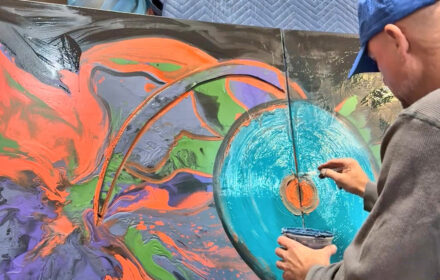
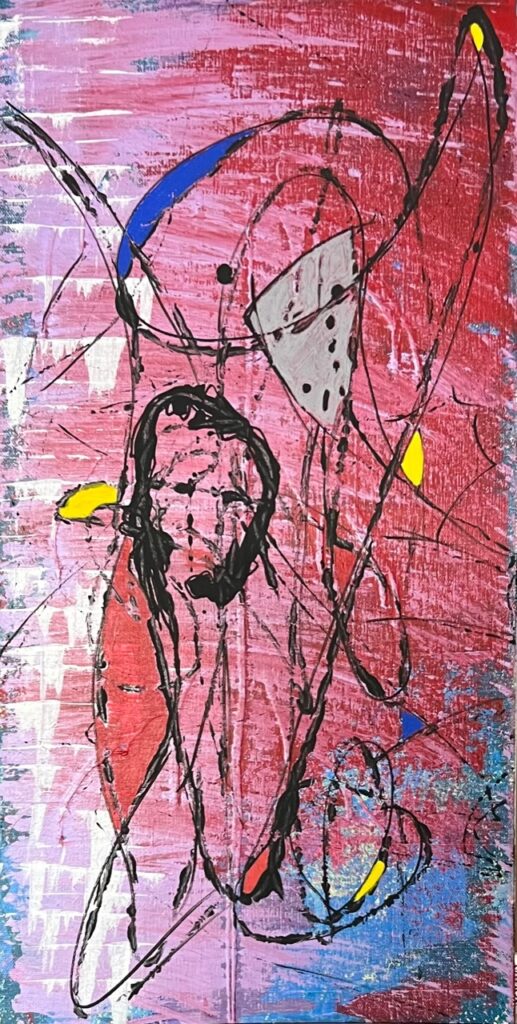
Gore’s paintings rarely arrive fully formed — instead, they unfold through layers and surprises, with even he is rarely certain of the final outcome at the beginning. He might start with a loose sense of direction — a mood, a color, a shape, or a visual idea — but the work quickly begins to shift as it develops, resisting fixed intention in favor of something more instinctive and alive.
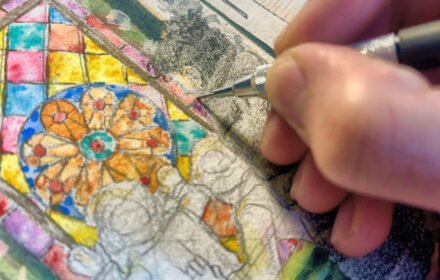
What defines his process is the way the work accumulates its own history over time. Paint is layered, buried, scraped back, interrupted, and sometimes rescued, creating a surface that behaves less like a finished image and more like a record of its own evolution. The paintings begin to hold traces of every stage they’ve passed through, where even what disappears continues to influence what remains visible.
Rather than moving toward a clean resolution, the work builds through that tension between intention and transformation. Each layer adds another moment of decision and revision, allowing the surface to feel active rather than static — as if it’s still in conversation with everything that came before it.
“The good stuff happens in the argument between what I thought I was making and what the painting starts demanding…Layers get buried, scraped, interrupted, rescued. Some of the best parts of a painting are things that almost disappeared.”
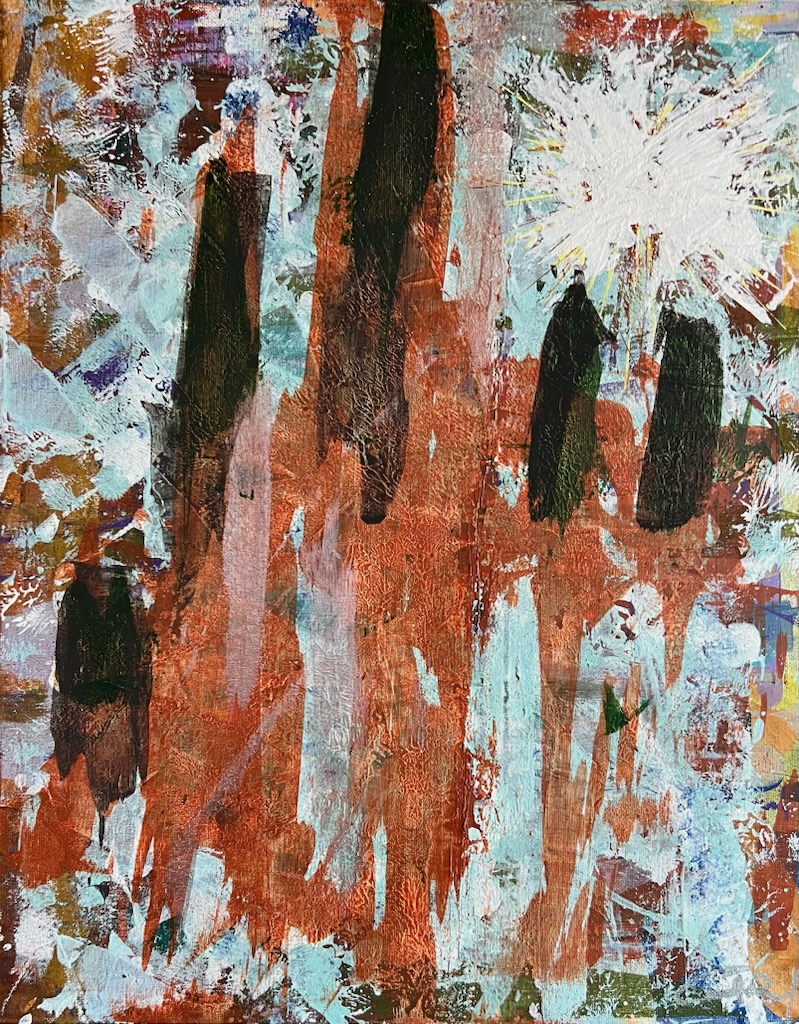
Painting as improvisation, emotional release, or something closer to storytelling?
Beneath their energetic surfaces, Gore’s paintings operate in a space where improvisation, emotional release, and storytelling all exist at once. The work isn’t built from a single fixed approach but from a responsive process — reacting in real time, working through feeling, and letting narrative emerge in fragments rather than in a linear sequence.
Meaning, in this sense, is constructed through collision rather than clarity. Color, movement, texture, and symbolic gesture interact without settling into a single reading, allowing emotion and imagery to overlap instead of resolve. The result is a visual language that feels instinctive but deeply layered, where spontaneity and intention constantly negotiate with one another.
Because of that openness, the work resists explanation in favor of experience. The viewer becomes part of the process, bringing their own memory and interpretation into the piece, completing something that was never meant to be closed or singular.
“The good stuff happens in the argument between what I thought I was making and what the painting starts demanding…Layers get buried, scraped, interrupted, rescued. Some of the best parts of a painting are things that almost disappeared.”
Joy as Resistance
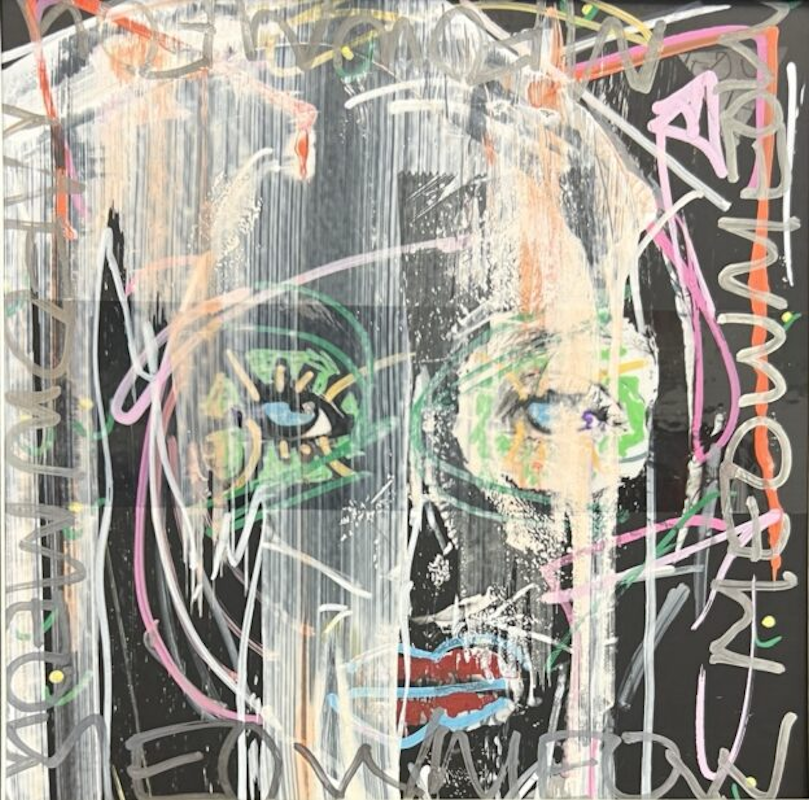
Even in its chaos, the work carries a strong sense of optimism — but not the polished, performative kind. It’s grounded in something more stubborn. In a world full of noise, exhaustion, and overstimulation, making work that is colorful, playful, and emotionally open becomes a way of refusing to be flattened by it.
Joy, in this context, isn’t decoration. It’s survival. Humor, color, music, memory, and play become tools for staying human when everything else feels overwhelming. The work doesn’t pretend reality isn’t difficult — it simply refuses to let that difficulty erase feeling altogether.
“I don’t think joy is lightweight. There’s a lot of noise, fear, ugliness, and exhaustion in the world. Making something colorful, playful, alive, and emotionally open can absolutely be a form of resistance. Joyful art doesn’t mean ignoring reality. Sometimes it means refusing to let reality flatten you.”
The Next Chapter: Bigger, Louder, More Alive
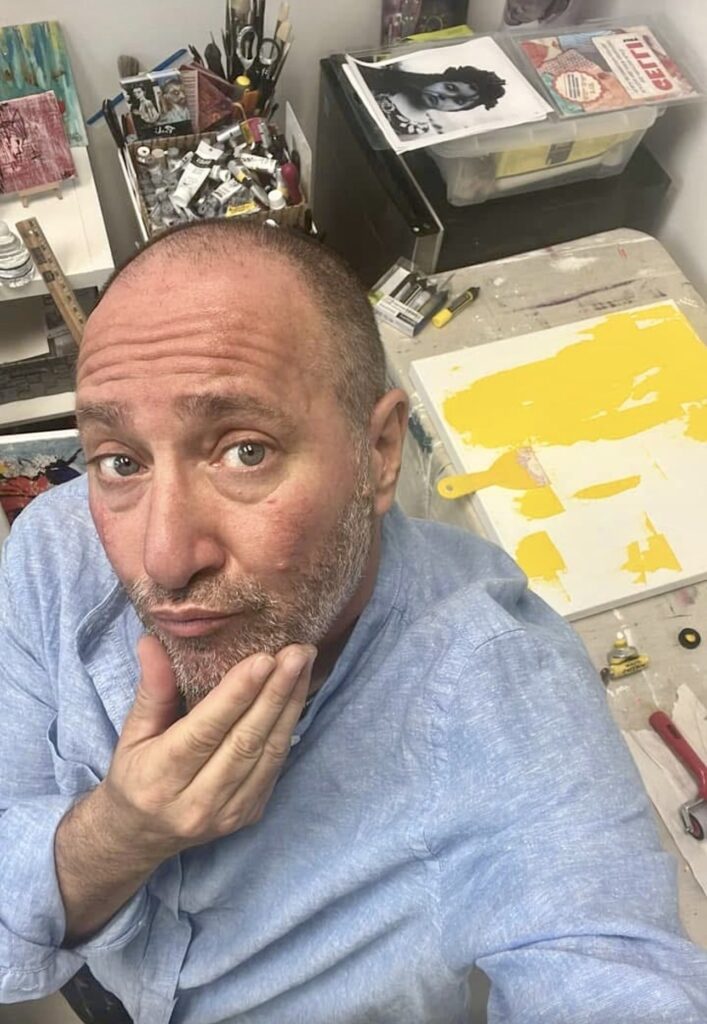
Looking forward, Gore is less interested in refining a single style and more interested in expanding the entire ecosystem around it. His work is moving toward more immersive experiences — where painting, music, installation, performance, and environment begin to overlap and feed into each other.
The goal isn’t to simplify the practice but to expand it: more scale, more texture, more mixed media, more interaction, more ways for the viewer to step inside the work rather than simply observe it. Everything still carries his core language — color, rhythm, humor, grit, nostalgia — but now it’s being pushed into new dimensions.
At the center of it all remains the same pursuit: making work that feels alive. Not perfect. More human.
Discover the World of Gary Gore on OHMyeah.com
From explosive color palettes to layered emotional textures, Gary Gore creates work that feels like memory remixed through music, motion, and downtown energy.
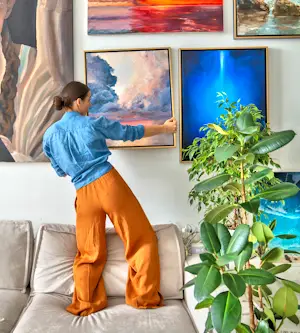
 Explore Gary’s vibrant collection on OHMyeah and bring home a piece of joyful chaos .